Fuchsia Hanging Baskets

Every year I choose a crop to worry about. Last year it was the big hanging baskets. I felt we didn't have enough soon enough. This year I look around with satisfaction at the range of baskets we have and how well they are sizing up. Oh and Fuchsias. They seemed to sell out in no time last year. All you Fuchsia lovers better come because this year I have lots.

Osteo_3

This year I have had no sleepless nights because I believe we have a reasonable stock of all the essentials and then s

ome. Take a look at our revised plant list. You will see that we may even have gone a bit overboard. Nineteen types of Sedums…what was I thinking?

Still lots to do before we can set up a display, but with a winter storm 2 days ago to cope with, I hope we can be forgiven.


Garlic Progress

For the past three years we have been experimenting wth overwintering a garlic crop in our greenhouses. We do so in the greenhouse that houses our overwintering perennials. It is kept heated to maintain a temperature of about -5C so that everything freezes but does not get exposed to extreme cold.

In addition to a normal crop grown from cloves we have produced bulbils. These bulbils will develop into normal bulbs over the course of succesive plantings taking up to 4 years to do so. In the years leading up to them producing normal segmented bulbs they produce rounds. The rounds are normally smaller then a clove of garlic and until they reach the proper stage won't be segmented into cloves. 

It is all quite fun although I have to admit that Ruth planted everyone of these boxes in the fall!…..so I guess she had most of the fun  smiley.

Our Garlic crop just before moving outside

Our next step is to go through the boxes and do any weeding (very little) and them move them onto the outside beds to grow on to maturity. 

Stay tuned to get your garlic scapes!


Seeding Over the Years

g3917We are into our 32nd season of growing. A lot has changed in the industry and for me personally when it comes to planting seeds.

The first 2 years I seeded into open flats just scattering the seeds by hand. This is quick and easy but it can be hard for the transplanters and the seedlings to be pulled apart and transferred to the next size container.

To reduce the shock to the plant’s system it was decided in the industry that it would be best to seed the seeds individually into trays with tiny cells called plug trays.

My first seeder to accomplish this job was a vacuum box attached to a vacuum cleaner that had little holes with the spacing of the plug tray. This was a fiddly and time consuming process but it mostly worked.

Next came someone’s used automatic seeder which mostly worked but I was known to have serious fits of frustration when something broke and it would be a week or 2 to get the parts. I have a tight timetable I follow for seeding and losing 2 weeks is serious business.

Finally I got my then brand new Niagara Seeder made right here in Ontario. I loved it when I first got it and I still love it now. It is fancy enough but not too fancy. I rarely have repair issues and they are always dealt with promptly. It’s ways of operating is simple enough that Brian or Alex can usually sort out what the problem is when something goes awry.

The latest development is that Brian and Alex have developed a separate seeder for seeding greens. The most wonderful thing about it so far is that Brian and Alex have seeded all the greens since they came up with it.    

httpv://www.youtube.com/watch?v=5wolXhbclQA&feature=youtu.be

Sea Buckthorn

The bright orange berries of this plant are among the most nutritious and vitamin rich fruits known. The shrub is attractive and tolerant of degraded soils. We have 2  female varieties and one male variety. It is usually recommended that  you plant one male for every 6 females.

Watering

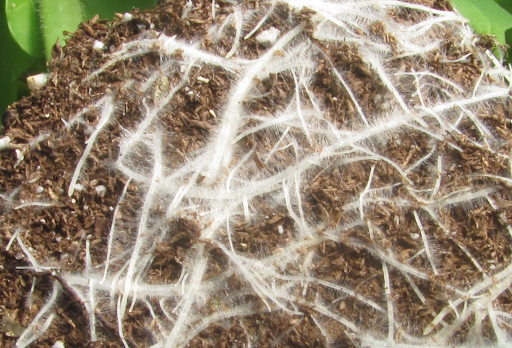
roots.png

One of the facts of life in this business (maybe all businesses) is that of repeating questions and the most common questions we get are about watering. Sometimes people don't even know their question is about watering!

In training our own staff to water the most important instruction we give is that you have to make a judgment first before you water. I am sure (I hope!) that at the outset this appears to be a daunting task. Every plant in the garden centre must be checked and a judgment made about its level of dryness along with factoring in how long it will be before you might be able to check them again. Once that decision is made the next part is easy …. apply sufficient water to saturate the soil. 

How do you know when the soil is dry enough to water? That comes with experience but our rule of thumb is the water them just before the point of wilting. As you observe the reaction of any plant as the soil dries you will be able to predict that point. Like so many things in gardening their is no substitute for experience. Judgment > apply water if needed > repeat. 

The reason that you need to let the soil dry out is that the roots need oxygen derived from the air. Water holds less oxygen than air and if the roots are saturated for too long a period of time they will start to die from a lack of oxygen. 

If you let the plants dry out to the point of wilting for too long a period of time you will start to desiccate the fine root hairs that are so valuable in increasing the surface area of the roots. Back to my our own staff. In training we always take plants out of pots and look at the roots with a magnifying glass (see image from above). When you do that you will see many fine hairs and it is very easy to see how they could be susceptible to being damaged from drying out. 

Once you damage those fine root hairs from either over-watering or under-watering the result is the same. The plant no longer has sufficient root system to support its top growth. As with many statements of "fact" there is a qualifier. Plant top growth tends to match the root system other wise the plant would not be able to take up enough water and nutrients. It seems like common sense but in fact conditions can arise that  will make a plant ill-prepared for the conditions it is facing. If a plant has come out of a greenhouse it has likely been a very humid environment. Once moved outdoors it will be subjected to very different conditions. The plants root system may not be prepared for the differing conditions and the plant may wilt even with wet soil. Remember my rule before was a "rule of thumb" ….this is the exception. What you can do to help the plant adapt is give it some shade and/or a bit of a misting to increase the humidity around the plant so it is not giving off as much water from its foliage (transpiring). Once it has larger root system capable of doing the job your special treatment can end. 

What is the most common question we get? " How often should I water it?".  If you understand what I have written above then you know that the answer to that question is a complex one and that you cannot water on a schedule. You should check your plants on a schedule . I think Yoda said in Star Wars "Water not Luke, check"….or words to that effect!

Chipping Sparrow

CS_cropped.jpg

We love our big population of birds at Burt's Greenhouses but Brian and I have decided that the Chipping Sparrow should be our mascot.

They eat seeds and insects so they help us out keeping pests down. They navigate the greenhouse area smoothly getting in and out with a minimum of fuss. Unlike the Robins, their nests don't cause problems by blocking irrigation troughs. We love the sound of their singing and the cute tapping of their feet as they are walking around under the foliage of our plants.

But best of all they sing for us! You can be in a greenhouse with the pouring rain pounding on the roof and dominating over the din is the joyful sound, clearly for our benefit of the 15 gram chipping sparrow. It is one of the wonders of the world that one of the tiniest creatures can have one of the biggest and most beautiful voices.

We move the plants we can, out to get hardened off to save you the trouble. When they first go out it can't be a windy day or too cold because they get damaged. Give them time to acclimatize and they can take just about anything. Many can take a frost. I wouldn't mind being able to do that, instead of having to run and get a coat all the time.

Room for the Snake

You asked me why I garden. I replied it is a miracle that I do. And even more of a miracle that I enjoy it. I come from a long line of gardeners who taught me about the hard work but none of the pleasures. That was left for the garden herself to teach me.

Let’s face it. It’s not for the faint hearted. Someone once said you don’t garden to get in shape. You have to be in shape to garden.
You can get all the weight-bearing exercises you need right outside the door without paying a membership fee. The price of admission is a willing heart and a strong back.


Just lifting those 40 pound bags of manure and top soil out of the trunk of the car is one thing. Getting it to where it will do the most good is a whole other thing. Then there’s the digging in; all good aerobic exercise, both for the soil and your self.

And just don’t let me loose with a credit card in a nursery. Interesting term that – nursery. I never thought of myself as the nurturing kind; but present me with a bedraggled orphan of a plant and I go all soft and gooey.  

In spring when those trusting little sprouts blink up at you from their bed of fallen brown leaves.  Who could resist that? It is like welcoming old friends who you feared might have died. But here they are, safe, sound and renewed from their long nap; bursting to show you what they can do.

I know each leaf, I know each stem and I know all their names, their likes and dislikes. Give this one a little more water, that one some lime. The kid in the corner; she likes to cool her heels so insulate her roots from the sun.

In summer the warm soft belly of my garden is so welcoming that I can’t keep my hands off her. Barehanded I rid her of weeds, dig in more manure or lime, quench her thirst with rain from my barrels.

But it’s more. It is the feel of doing something forbidden, being a naughty kid again, wallowing in the dirt and digging right in there barehanded. It’s daring. Get some dirt in your hair and on your face and don’t give a damn who sees you licking the salt off your upper lip.

And I like the mystery of it. If I am pretty sure I didn’t plant something in that spot; if I can’t identify this little bit of green as any particular weed I let it grow. I give it time to strut its stuff before I make any rash decisions. Thanks to the winds, the birds and the squirrels I have been the recipient of some very interesting floral gifts.

I have just begun to create a healing garden. I can feel my face going a little pink as I admit to you that many of the tender plantlets I drove several hours to find, buy, bring home and tend to have grown up to resemble the ones that I had been taught to (and spent years doing so) eradicate!

How about the wonderful world of vegetables? As I take my morning walk about I marvel at how my 

worm compost has turned these uncertain teenagers into blossoming young adults.  I am concentrating on heritage plants as frankly the genetically improved ones scare the be-jeepers out of me.

As for the spiritual side of gardening this poem by Dorothy Frances Gurney says it well:
The kiss of the sun for pardon,
The song of the birds for mirth,
You're nearer to God in a garden than any place else on earth.

I give free reign to my creative side in the garden. For the price of putting my shoulder to the wheel barrow and my back into the shoveling I can change my little world. Maybe I want it flat, maybe I want a hill, a waterfall, a pond, a Japanese garden. All it takes is a little inspiration and a whole lot of perspiration.

My garden is an extension of me. We are a team.  I just provide the venue, and the drinks. The garden does the rest.  The flowers dress in their best, splash on some perfume and put on a great show for the onlookers. The veggies provide the fuel.  And if we do well we can bask in the glow of the compliments we win.  

All gardens are mirrors of those who tend them. I like to imagine their gardeners. Are they bold and fun-loving? That harlequin mix of purples and yellows and oranges says yes.  Does a pale pastel palette reflect a conservative and contemplative gardener? This one is surely well-organized with everything marching in precise rows and pruned into matching shapes? Or are they wild and crazy with flowers and grasses and green peppers all making an exuberant stew. That weedy, neglected one has a gardener who may be depressed or unwell.

I would like to think that my garden 

says I am energetic and caring. Fun-loving and carefree but still a thoughtful guardian of our earth and our fellow travelers. That I am a gardener who makes rooms for the snake as well as the snapdragon, the wasp as well as the nettle.

These words written by Canadian author and artist, Emily Carr are inscribed on her

Jane Brunton produced this at the watercolour workshop.

tombstone. They so eloquently express how I feel about the great big garden that belongs to all of us.

Dear Mother Earth!
I think I have always specially belonged to you. I have loved from babyhood to roll upon

 you, to lie with my face pressed right down on to you in my sorrows. I love the look of you and the smell of you and the feel of you. When I die, I should like to be in you uncoffined, unshrouded, the petals of flowers against my flesh, and you covering me up.

Jane Brunton


Carolyn_Fall_Grass

IMG_2166.JPG

by Carolyn Pickering

How quickly the summer has passed and we are now in one of the most thought provoking times of the year for a gardener. We often think we should wait until spring to make necessary changes to the garden plan but one of the advantages of fall gardening is that you are able to see the size, shape and texture of the foliage which is often absent in the spring.

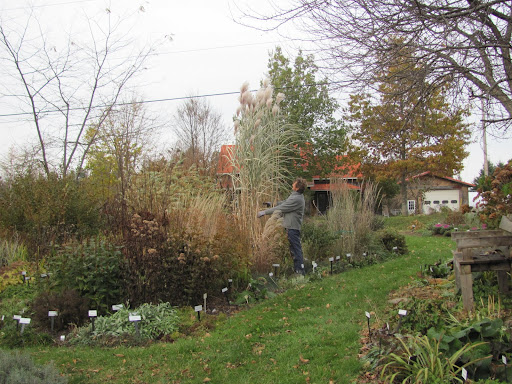
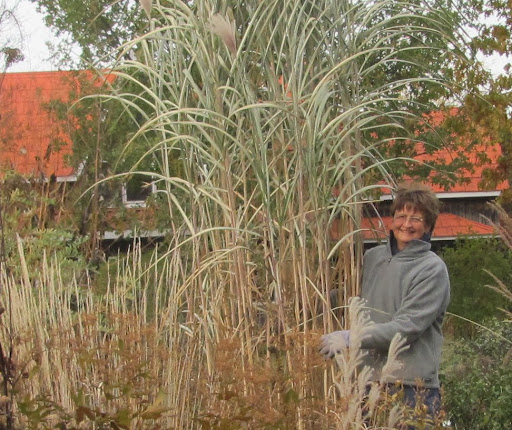
My particular delight in the garden at Burt’s is the wonderful selection of grasses and the fall is a perfect season to appreciate them. The Miscanthus Giaganticus is in its glory at present towering way above the other grasses with its elegant plumes supported by other grasses with varied stem colours. Bright spots of colour are provided by the flowering Kale poking their heads through the snow with a bright blast of purple. A much underrated plant, the flowering kale, provides colour in the garden up until the very cold temperatures destroy everything.

Fall in the garden is also a reminder of the cycle of gardening. A successful perennial garden is of course about timing flowering to give you constant interest. I like to make a plan and then highlight plants the different seasons to make sure there is a balanced flowering pattern to the garden.

Normally I leave the pruning to the spring unless a specific plant requires fall pruning. In this way you still have interest through the winter with seed pods and brightly coloured stems giving a new dimension to the garden. Watching the birds enjoy the seeds and find nesting material from the remains of last year’s garden can be a source of great interest and amusement in the spring.

We have been lucky with moderate temperatures this year. It is now November and I am still working in the garden. This week will see completion of the final job which is the mulching of the more delicate plants. The crisp Maple leaves covering the ground have served us well over the last few years as our final mulch. What a shame so many people throw away such a valuable resource.IMG_2168.JPG

The active gardening season is almost over for us all and time for me to content myself with indoor pursuits. I have come to the awful realisation that all I can do now is keep my fingers crossed for a mild winter and say “see you in the garden in the spring!”.

.please note; Burt’s Greenhouses will make every effort to remove Carolyn from her beloved Miscanthus and make sure that she is well looked after this winter. 

Watercolour workshop

Jane Brunton produced this at the workshop.

Credit is due to Carolyn once again. For a few hours each of the last 2 weekends a group of people led by Carolyn, have met in our gardens to learn a bit about painting with watercolours. It is a different group each time with a few regulars. We are quite a mixed bunch. Some really know a lot about painting, some are complete novices (me).  I was intrigued to see that the ones with experience were picking up ideas on technique that they hadn’t known. For us novices, Carolyn provided a non judgmental space in which to play around with colour. I would like to boast that the setting was perfect.  In under the trees with a light breeze blowing, staring at the gardens for inspiration. I think everyone left relaxed and happy for how they had spent their afternoon.

0
    0
    Your Cart
    Your cart is emptyReturn to Shop