Watering

roots.png

One of the facts of life in this business (maybe all businesses) is that of repeating questions and the most common questions we get are about watering. Sometimes people don't even know their question is about watering!

In training our own staff to water the most important instruction we give is that you have to make a judgment first before you water. I am sure (I hope!) that at the outset this appears to be a daunting task. Every plant in the garden centre must be checked and a judgment made about its level of dryness along with factoring in how long it will be before you might be able to check them again. Once that decision is made the next part is easy …. apply sufficient water to saturate the soil. 

How do you know when the soil is dry enough to water? That comes with experience but our rule of thumb is the water them just before the point of wilting. As you observe the reaction of any plant as the soil dries you will be able to predict that point. Like so many things in gardening their is no substitute for experience. Judgment > apply water if needed > repeat. 

The reason that you need to let the soil dry out is that the roots need oxygen derived from the air. Water holds less oxygen than air and if the roots are saturated for too long a period of time they will start to die from a lack of oxygen. 

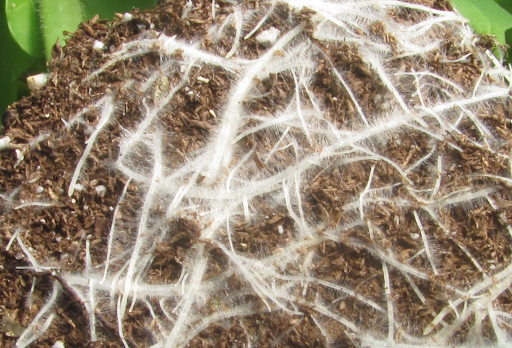
If you let the plants dry out to the point of wilting for too long a period of time you will start to desiccate the fine root hairs that are so valuable in increasing the surface area of the roots. Back to my our own staff. In training we always take plants out of pots and look at the roots with a magnifying glass (see image from above). When you do that you will see many fine hairs and it is very easy to see how they could be susceptible to being damaged from drying out. 

Once you damage those fine root hairs from either over-watering or under-watering the result is the same. The plant no longer has sufficient root system to support its top growth. As with many statements of "fact" there is a qualifier. Plant top growth tends to match the root system other wise the plant would not be able to take up enough water and nutrients. It seems like common sense but in fact conditions can arise that  will make a plant ill-prepared for the conditions it is facing. If a plant has come out of a greenhouse it has likely been a very humid environment. Once moved outdoors it will be subjected to very different conditions. The plants root system may not be prepared for the differing conditions and the plant may wilt even with wet soil. Remember my rule before was a "rule of thumb" ….this is the exception. What you can do to help the plant adapt is give it some shade and/or a bit of a misting to increase the humidity around the plant so it is not giving off as much water from its foliage (transpiring). Once it has larger root system capable of doing the job your special treatment can end. 

What is the most common question we get? " How often should I water it?".  If you understand what I have written above then you know that the answer to that question is a complex one and that you cannot water on a schedule. You should check your plants on a schedule . I think Yoda said in Star Wars "Water not Luke, check"….or words to that effect!

Room for the Snake

You asked me why I garden. I replied it is a miracle that I do. And even more of a miracle that I enjoy it. I come from a long line of gardeners who taught me about the hard work but none of the pleasures. That was left for the garden herself to teach me.

Let’s face it. It’s not for the faint hearted. Someone once said you don’t garden to get in shape. You have to be in shape to garden.
You can get all the weight-bearing exercises you need right outside the door without paying a membership fee. The price of admission is a willing heart and a strong back.


Just lifting those 40 pound bags of manure and top soil out of the trunk of the car is one thing. Getting it to where it will do the most good is a whole other thing. Then there’s the digging in; all good aerobic exercise, both for the soil and your self.

And just don’t let me loose with a credit card in a nursery. Interesting term that – nursery. I never thought of myself as the nurturing kind; but present me with a bedraggled orphan of a plant and I go all soft and gooey.  

In spring when those trusting little sprouts blink up at you from their bed of fallen brown leaves.  Who could resist that? It is like welcoming old friends who you feared might have died. But here they are, safe, sound and renewed from their long nap; bursting to show you what they can do.

I know each leaf, I know each stem and I know all their names, their likes and dislikes. Give this one a little more water, that one some lime. The kid in the corner; she likes to cool her heels so insulate her roots from the sun.

In summer the warm soft belly of my garden is so welcoming that I can’t keep my hands off her. Barehanded I rid her of weeds, dig in more manure or lime, quench her thirst with rain from my barrels.

But it’s more. It is the feel of doing something forbidden, being a naughty kid again, wallowing in the dirt and digging right in there barehanded. It’s daring. Get some dirt in your hair and on your face and don’t give a damn who sees you licking the salt off your upper lip.

And I like the mystery of it. If I am pretty sure I didn’t plant something in that spot; if I can’t identify this little bit of green as any particular weed I let it grow. I give it time to strut its stuff before I make any rash decisions. Thanks to the winds, the birds and the squirrels I have been the recipient of some very interesting floral gifts.

I have just begun to create a healing garden. I can feel my face going a little pink as I admit to you that many of the tender plantlets I drove several hours to find, buy, bring home and tend to have grown up to resemble the ones that I had been taught to (and spent years doing so) eradicate!

How about the wonderful world of vegetables? As I take my morning walk about I marvel at how my 

worm compost has turned these uncertain teenagers into blossoming young adults.  I am concentrating on heritage plants as frankly the genetically improved ones scare the be-jeepers out of me.

As for the spiritual side of gardening this poem by Dorothy Frances Gurney says it well:
The kiss of the sun for pardon,
The song of the birds for mirth,
You're nearer to God in a garden than any place else on earth.

I give free reign to my creative side in the garden. For the price of putting my shoulder to the wheel barrow and my back into the shoveling I can change my little world. Maybe I want it flat, maybe I want a hill, a waterfall, a pond, a Japanese garden. All it takes is a little inspiration and a whole lot of perspiration.

My garden is an extension of me. We are a team.  I just provide the venue, and the drinks. The garden does the rest.  The flowers dress in their best, splash on some perfume and put on a great show for the onlookers. The veggies provide the fuel.  And if we do well we can bask in the glow of the compliments we win.  

All gardens are mirrors of those who tend them. I like to imagine their gardeners. Are they bold and fun-loving? That harlequin mix of purples and yellows and oranges says yes.  Does a pale pastel palette reflect a conservative and contemplative gardener? This one is surely well-organized with everything marching in precise rows and pruned into matching shapes? Or are they wild and crazy with flowers and grasses and green peppers all making an exuberant stew. That weedy, neglected one has a gardener who may be depressed or unwell.

I would like to think that my garden 

says I am energetic and caring. Fun-loving and carefree but still a thoughtful guardian of our earth and our fellow travelers. That I am a gardener who makes rooms for the snake as well as the snapdragon, the wasp as well as the nettle.

These words written by Canadian author and artist, Emily Carr are inscribed on her

Jane Brunton produced this at the watercolour workshop.

tombstone. They so eloquently express how I feel about the great big garden that belongs to all of us.

Dear Mother Earth!
I think I have always specially belonged to you. I have loved from babyhood to roll upon

 you, to lie with my face pressed right down on to you in my sorrows. I love the look of you and the smell of you and the feel of you. When I die, I should like to be in you uncoffined, unshrouded, the petals of flowers against my flesh, and you covering me up.

Jane Brunton


Carolyn_Fall_Grass

IMG_2166.JPG

by Carolyn Pickering

How quickly the summer has passed and we are now in one of the most thought provoking times of the year for a gardener. We often think we should wait until spring to make necessary changes to the garden plan but one of the advantages of fall gardening is that you are able to see the size, shape and texture of the foliage which is often absent in the spring.

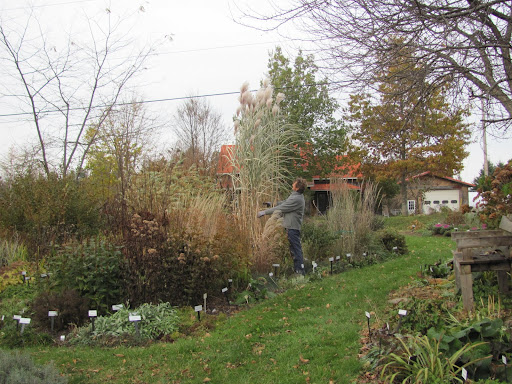
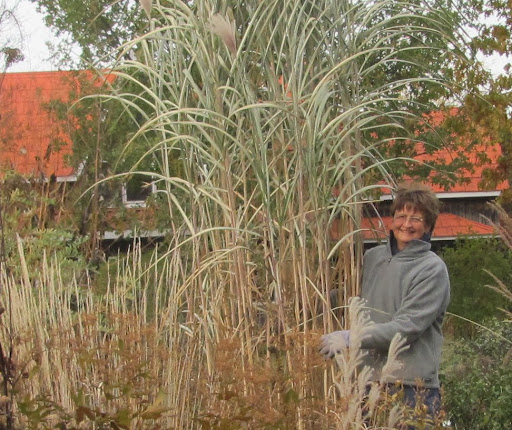
My particular delight in the garden at Burt’s is the wonderful selection of grasses and the fall is a perfect season to appreciate them. The Miscanthus Giaganticus is in its glory at present towering way above the other grasses with its elegant plumes supported by other grasses with varied stem colours. Bright spots of colour are provided by the flowering Kale poking their heads through the snow with a bright blast of purple. A much underrated plant, the flowering kale, provides colour in the garden up until the very cold temperatures destroy everything.

Fall in the garden is also a reminder of the cycle of gardening. A successful perennial garden is of course about timing flowering to give you constant interest. I like to make a plan and then highlight plants the different seasons to make sure there is a balanced flowering pattern to the garden.

Normally I leave the pruning to the spring unless a specific plant requires fall pruning. In this way you still have interest through the winter with seed pods and brightly coloured stems giving a new dimension to the garden. Watching the birds enjoy the seeds and find nesting material from the remains of last year’s garden can be a source of great interest and amusement in the spring.

We have been lucky with moderate temperatures this year. It is now November and I am still working in the garden. This week will see completion of the final job which is the mulching of the more delicate plants. The crisp Maple leaves covering the ground have served us well over the last few years as our final mulch. What a shame so many people throw away such a valuable resource.IMG_2168.JPG

The active gardening season is almost over for us all and time for me to content myself with indoor pursuits. I have come to the awful realisation that all I can do now is keep my fingers crossed for a mild winter and say “see you in the garden in the spring!”.

.please note; Burt’s Greenhouses will make every effort to remove Carolyn from her beloved Miscanthus and make sure that she is well looked after this winter. 

Learn to love the Tortoise Beetle

IMG_0455.JPG

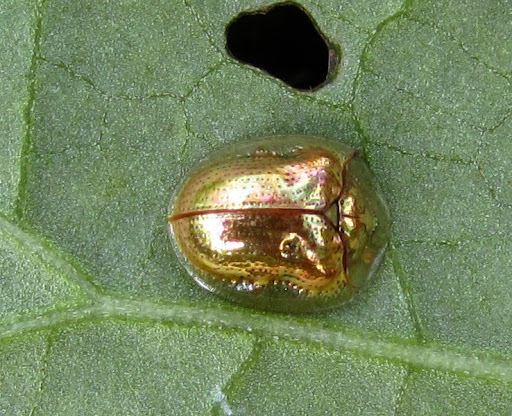
This is an image of a Tortoise Beetle. If you grow ipomea then you have seen these. That would include morning glory and all forms of sweet potato vine, ornamental or not.

I must admit that I have horrified some people with my exuberant enthusiasm for this …pest. How could I have any kind thoughts for something that puts wholes in the leaves of ours and your ipomea? Well my reasoning is partly along the lines of "if you can't beat em". The fact of the matter is I have never seen plants in landscape circumstances that have not had some holes in the leaves caused by Tortoise Beetles.  Secondly I have also never seen enough damage caused by these creatures to effect the growth of the plant.

Now even the most die hard skeptic must admit that this is one of the most handsome bugs they have seen in the garden. They are a brilliant golden colour with some variations having some spots about the size of a lady beetle.  For me they are the perfect example of how you can learn to appreciate all elements of your garden and in the process allow a balance without the battle.

But I have not finished with my story and enthusiasm for the Tortoise Beetle. The larval stage of the beetle (likely responsible for the bulk of the damage) is not without its charms. The larva has a defence mechanism that makes it one of the coolest show and tell creatures in your garden. It has a tail about the length of it s body that it folds back along the top of its body. On its tail it deposits…its poop.  It ends up with this poop encrusted tail curled over its back. As if that was not enough to discourage predators it will flick its tail in the face of any threats.

So now the next time you are having a backyard barbecue and your guests are admiring your beautiful gardens you can show them both the most beautiful and coolest thing in your gardens …just don't let them get too close with their drinks!

Every Car a Picture.

Our friends Orrie and Andrea were part of the courageous group of customers who came

out on Saturday to purchase plants for their garden. I gave them a bit of a tour showing them the garlic, greens and green onions we are growing. The trunk and back seat were full before they left (note; always a good idea as unbalanced plant loads in your car can be a major hazard!) . Andrea called me over to see how lovely the back seat looked with the new flower and vegetable “arrangement”.

One of the pleasant aspects of this business is that customers are by and large happy. They are purchasing beautiful things that allow them to connect to their environment and they are full of hopeful plans as they pull out of our parking lot.

Oh Helen they are Mother’s to!

One of my Mom’s favorite and most impassioned stories was of chasing down a red tail hawk as a small girl.

Mom loved animals. She had banty hens in the hen house next to our house. She nutured them and talked to them every day. There was nothing she loved more than to bundle up and get loaded on a sliegh pulled by our draft horses. She was a farm wife and not unfamiliar with the stables and our dairy cattle. But when it came to wildlife Mom was conflicted. Many times she had witnessed skunks, raccoons or foxes ravage the chickens.

I once red a story about Pierre Elliot Trudeau demonstrating white anger as opposed to red anger. Red anger was diffuse and chaotic. White anger was focused and in control.

Well on that day when she was ten years old my Mom demonstrated white anger. She saw it in the form of a red tail hawk and she raced screaming across the field while the hawk tried desperately to escape with its prey. Moms determination was so focused that she managed to get the hawk to release the chicken. I don’t now how the chicken fared but I know Mom’s white anger about hawks stayed alive until the day she died.

The last few years we have had a pair of red tail hawks nesting just below the house where we lived. They have provided a great deal of joy watching them soar over the barn and defend themselves from the Ravens.

I realize that Mom had justification for feeling how she did and I believe that my sisters and I were the beneficiaries of her white anger in defense of us.

So Mom Happy Mother’s Day an I just want you to realize that those hawks were mother’s to!

Morning Serenade

This morning Ruth and I uncovered our back beds. It was a quiet morning with no wind making the job light work. The sun was almost shining, a rare event this spring making it nearly perfect. To top it all off we had a lovely accompanist singing his heart out the whole time!

Garlic

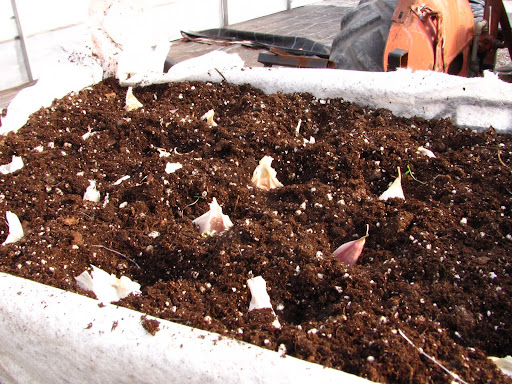
Last fall we did an experimental planting of garlic in boxes in our greenhouse.

IMG_0596.JPG

We are able to overwinter this garlic in a greenhouse that is kept at about a minimum of -5 C.

It came through the winter beautifully and we moved the boxes out to our outside beds about 3 weeks ago.  these beds have bottom heat are are covered if it is going to freeze at night. We left two boxes outside in an unheated uncovered location and they appear to be doing about the same as the ones pictured here.

In between the garlic patches you can see a crop of perennial winter green onions. They came through to winter looking very good as well but small. They are starting to pick up speed now. We would likely seed them much earlier next year in order to harvest green onions in March or April.

Ernestown High School band starts their trip to The Rock at Burt’s Greenhouses

The school band from Ernestown Secondary School are off to Newfoundland for a band exchange.  To raise money different students have been showing up on weekends to do work for us to help pay for the trip. Nothing about sitting at a desk all day at school prepares a person for a full day of physical work. They are usually  pretty tired by the end of the day but they stick with it. The Newfoundland Kids show up soon. I hope that they all have lots of fun.

Greenhouse Tour

We conducted a tour late yesterday afternoon for the second year Engineering Energy Systems Technology students from St. Lawrence College.

The professor is Ian Kilbourn. Ian has organized this group on a couple of occasions to have a visit and have us yak away at these poor unsuspecting souls!

Since it was such a large group we split them into two groups and Alex toured the biomass heating system while I toured the greenhouse heating system in the greenhouses and the back beds.

It is always fun to give people tours and especially fun and easy when you have a bright interested bunch like these folks were. Everyone seemed to be paying attention and many had questions that made the tour that much more interesting.

….. and many thanks to Ian and his class for coming to visit us!

0
    0
    Your Cart
    Your cart is emptyReturn to Shop